
















With Andy Burnham installed at No 10 today, Richard Steer sets out the practical steps a new prime minister should take in his first 100 days to unlock stalled projects, stabilise investment and rebuild capacity

Now that Andy Burnham is entering Downing Street I cannot help wondering if he will follow the path of his namesake Robb Stark from the TV show Game of Thrones, called King of the North by his acolytes – a heroic, principled, strong figure, forging his own destiny. Or will he end up like his father Ned? He didn’t make it past the end of the first series – having his head surreptitiously removed by enemies due to his political naivety.
Burnham comes to the prime ministerial role with his own mandate for change and be under no illusion, the built environment sector will be one of the first places where that promise is tested in reality rather than rhetoric. Housing targets, infrastructure delivery, retrofit at scale and the journey to net zero all sit here.
Yet delivery remains constrained, not by ambition, but by friction, financial uncertainty, regulatory complexity, and institutional capacity that has not kept pace with demand.
The industry does need confidence, clarity and a sense that government understands how projects are actually delivered on the ground
The first hundred days matter less for sweeping reform than for restoring momentum. The industry does not need reinvention but it does need confidence, clarity and a sense that government understands how projects are actually delivered on the ground.
One of the quickest ways to unlock stalled activity would be a temporary, tightly focused incentive regime to stimulate construction investment. Many schemes that are commercially viable in principle are currently held up in boardrooms because returns are marginal in an environment of high borrowing costs and uncertainty. Time-limited enhanced capital allowances, particularly aimed at housing, retrofit programmes and infrastructure aligned with net zero objectives would help tip decisions from amber to green.
One of his first sensible proclamations would be to abandon the ludicrous 1.5 million housing target, invented by Angela Raynor and adopted by Steve Reed
This coupled with stronger incentives for modern methods of construction, digital design and low-carbon materials would send a clear signal that productivity and innovation in construction are being actively rewarded, not just encouraged in principle.
One of his first sensible proclamations would be to abandon the ludicrous 1.5 million housing target, introduced under the administration’s first housing secretary Angela Raynor and adopted by her successor Steve Reed. These numbers are delusional, so why persist with the fantasy?
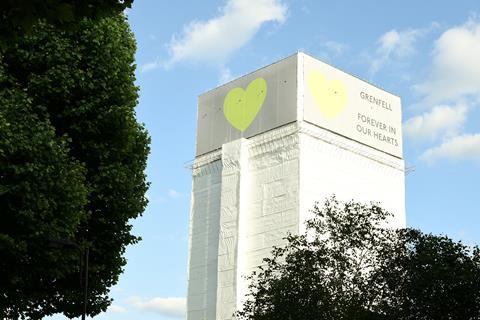
Alongside this, the regulatory environment that has evolved since Grenfell remains an area where intent and outcome are not always aligned. No one in the sector would argue against the primacy of safety, and rightly so. But what has emerged is a landscape of overlapping requirements, shifting interpretations and inconsistent application across different authorities. The result is not just delay but uncertainty, which is corrosive to investment and slows remediation as well as new build.
We need rationalisation of guidance so that compliance is clear, consistent and proportionate. The objective should be to remove ambiguity wherever it exists, because ambiguity is now one of the most significant hidden costs in the system.
Planning is another area where reform is often discussed as though it is purely about policy design. In reality, the binding constraint is capacity. Local planning departments are stretched thin, competing for talent with the private sector and often working with systems that have not kept pace with the complexity of the applications they are asked to assess. Even the best designed reforms will struggle to deliver results if decisions cannot be processed efficiently.
What we need is a sustained investment in planning capability; recruitment, training, digital systems, and greater consistency in how rules are applied across authorities. Standardised design frameworks for housing and infrastructure would also help reduce duplication and speed up decision-making without undermining local democratic input.
Cost and supply chain stability also deserve attention. Materials pricing has become increasingly volatile in recent years, with steel in particular subject to global fluctuations that feed directly into project uncertainty. The issue here is not ideology but predictability. Contractors and clients need confidence that forward pipelines are visible and that procurement frameworks are structured in a way that supports long-term planning rather than short-term price shocks.
Greater coordination between government infrastructure programmes and domestic production capacity would help stabilise expectations and improve resilience across the sector.
Finally, there is the question of skills, which remains the quiet limitation hiding behind almost every delivery challenge. The industry is changing rapidly, with increasing demand for digital capability, retrofit expertise and more sophisticated project management skills. Yet the pipeline of talent has not kept pace.
A more joined-up approach between government, industry and education providers that treats construction as a modern, high-value career path rather than a traditional labour market with familiar shortages is what we need
Taken together, these measures are not radical. They are practical, incremental steps that would have an outsized impact if delivered early in a government’s life. The built environment does not lack ambition - it lacks friction-free pathways to delivery.
The test of the first hundred days will not be whether every problem is solved, but whether momentum is restored. If government can show it understands how to unlock stalled projects, stabilise investment conditions and rebuild capacity in the system, then confidence will follow quickly and in this sector, confidence is the real catalyst for delivery. Then perhaps Andy Burnham will remain in the game, on the throne and not just be seen as King of the North but the whole country.
Richard Steer is chair of Gleeds Worldwide and a Building The Future Think Tank commissioner







No comments yet